

I am a nerd for simple heuristics.
Awhile back I was trying to develop a master personal flow chart (don’t worry, I will do a whole post on this in the future) for deciding when I will and when I won’t use AI.
As far as heuristics go this is about as simple as they come…
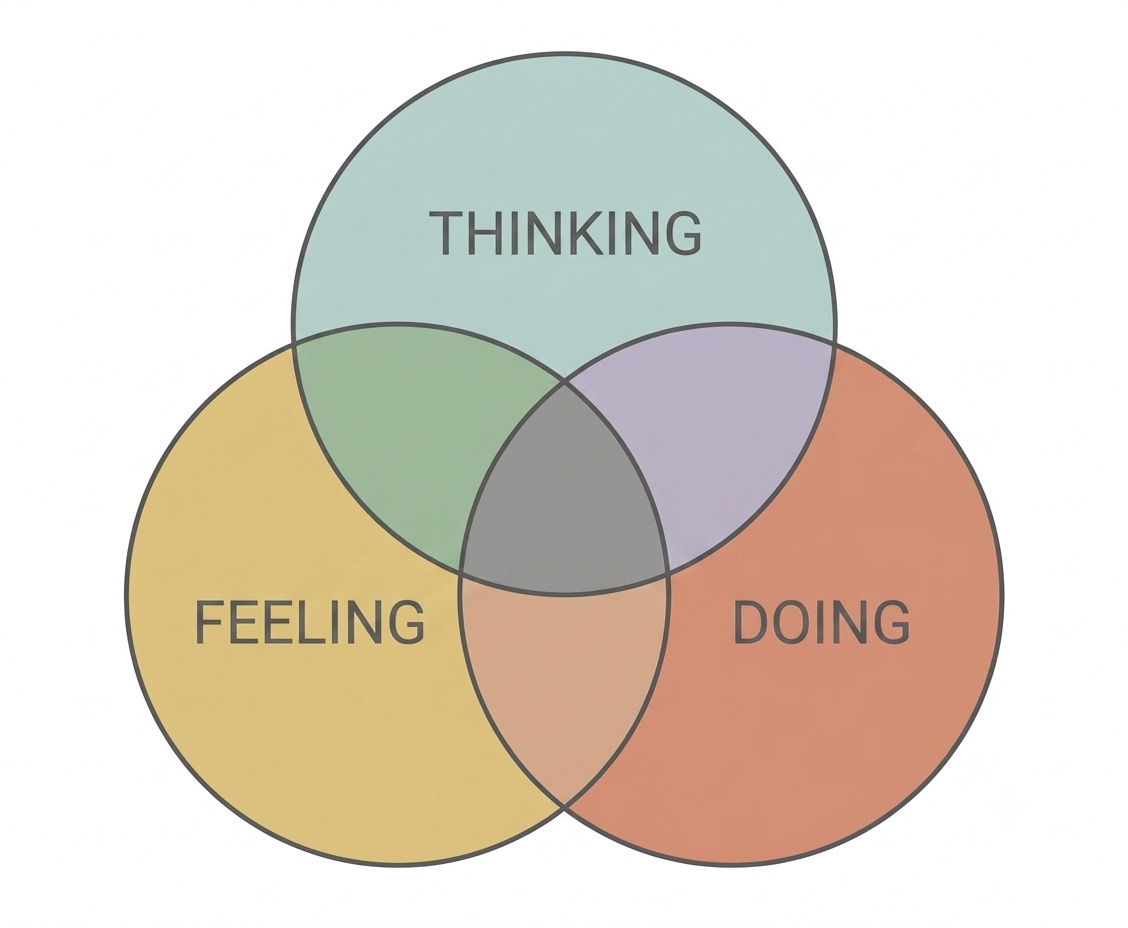
Some of you will be like, that’s John Frame…

You would be right. If you are unfamiliar you can read his primer on triperpsectivalism here.
All that to say, there are three different kind of prompts in AI - thinking prompts, feeling prompts, and doing prompts.
Thinking prompts are ones that help you cognitively connect dots, ideate, organize, prioritize, and things of that nature
Feeling prompts are ones that deal with relationships, emotions, and wisdom
Doing prompts are one that are task oriented
I don’t use AI ever for feeling prompts. I want to use prayer, the Bible, books, or human advice for anything involving wisdom, relationships, or emotions.
I use AI for thinking prompts when I am at the end of my cognitive rope and I need to push the frontier out a bit but I don’t utilize it until I have put in the intellecutal workout first. I think cognitive atrophy will be a real world dynamic in a few years, especially among power users. Also, I will have a forthcoming post on some observations on what agentic AI is doing to power users.
I use AI for doing prompts mainly in building spreadsheets and dashboards on stuff that is toil-centric.
Hopefully this little heuristic gives you some quick categories before you use AI to think a little bit meta about your prompt before you use the tool.
THINGS WORTH READING AT THE INTERSECTION OF RELIGION AND AI THIS WEEK:
“Policy on the AI Exponential“ - Dario Amodei
Peter Thiel moving to Argentina - New York Times
“Do Not Resign from Life” - L.M. Sacasas
“Designing AI for Human Flourishing: A Multidimensional Framework for Responsible AI Governance“ - Christos Makridis, Tyler VanderWeele, and Byron Johnson
Great post, Mike! Regarding "feeling prompts", is there room for AI input if filtered through specific source prompts? For example, would you advise against asking AI: "give me some Bible references I could use in a conversation with my 11-year old daughter who is struggling to fit in with her peers"?