

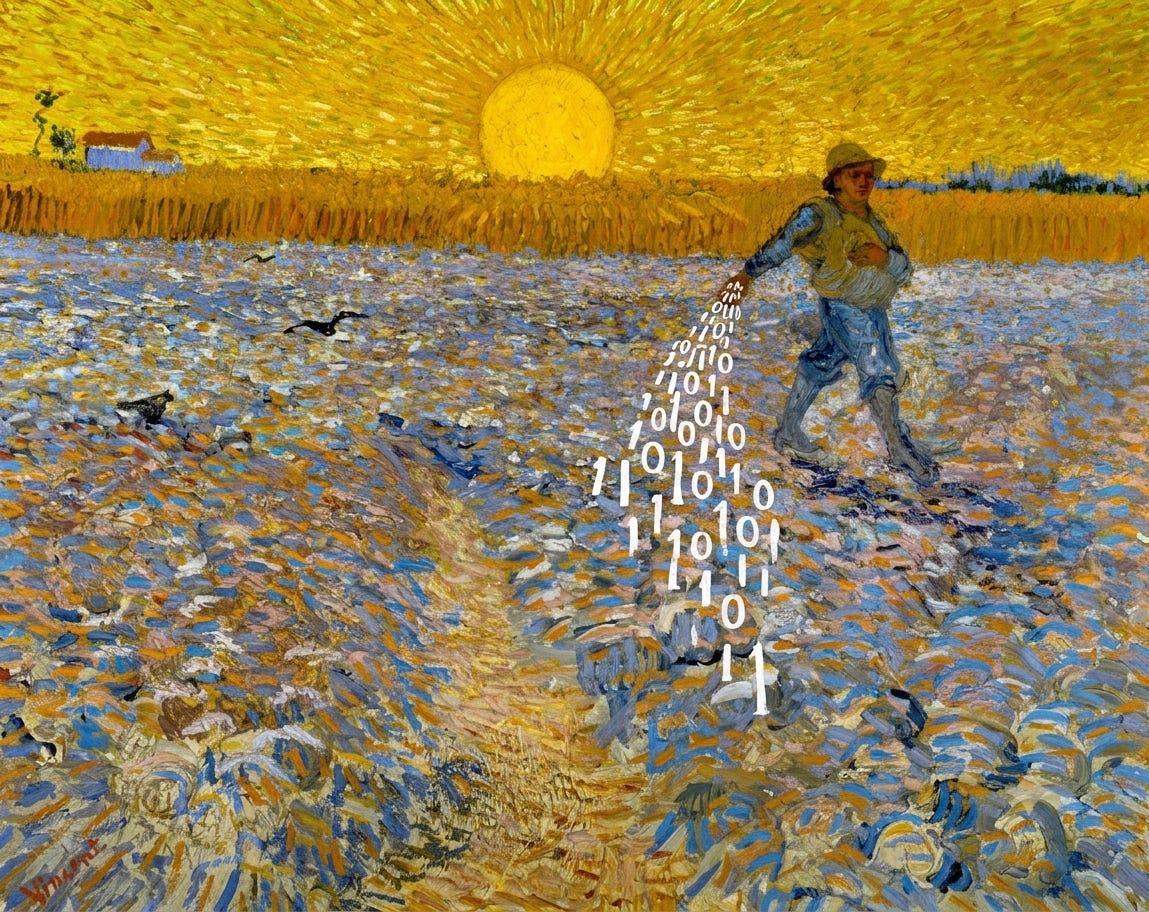
The AI era is similar to the industrial revolution and the inventions of electricity and the printing press. AI is similar to electricity because of how it can democratize and be a force multiplier wherever it is available. AI is similar to the printing press in that it rapidly increases the velocity of knowledge. AI is similar to the industrial revolution in that it will reorder the human workplace. Here’s the difference, these three inventions largely occurred in three different centuries (15, 18, and 19). The AI era is happening all at once and the new winners and losers in human capital will be swift. Broadly speaking, the invisible hand of the market will force a significant shift in human capital away from specialists towards generalists.
In the post-industrial and systematized farming era, specialists have been almost alone at the apex of the earning pyramid. The one obvious exceptions here are entrepreneurs and business owners — more on that in a minute. These specialists would be things like doctors, lawyers, accountants, engineers, programmers… etc. One has to ask themselves the question:
“How did those people become specialists?”
Those people became specialists because they acquired voluminous, costly, and lengthy education that was domain knowledge specific. Because of the depth, expense, and time involved that knowledge was scarce and therefore it was valuable. The problem is that the AI era has dramatically shortened the amount of time between not-knowing something and knowing something. The cost of acquiring that knowledge is effectively zero. The ability to receive nuance or depth in that knowledge domain is only limited by rudimentary prompt engineering or markdown skills. This leaves us with another important question:
“When knowledge has depreciated to near zero, what is valuable?”
In my last article, I said the answer is wisdom — and that remains true. However, we need to make this more concrete. Applied wisdom in the workplace means multi-domain expertise. The most valuable human capital in the future will be generalists who possess a strong working knowledge of 4-6 different domains instead of singular expertise of a single domain.
If I am correct here, then this has profound implications for the future of education and the reskilling of existing human capital. I would argue that the humanities, general education, logic, business administration, and systems thinking become more important than what they have been over the last decade or two. Those already in the workforce will need to be expanding their skills into broader domain knowledge. Even better will be those who can then apply systems thinking across multiple domains. This will be increasingly important in the agentic era of AI.
Here are a few developments in AI worth noting from this week:
OpenAI and Hugging Face partner to address security incident during model evaluation (OpenAI Press Release)
AI and Formation: How Does AI Shape Our Loves? [Silicon Spiritualities - Ep. 2 with Michael Keller]
“When knowledge has depreciated to near zero, what is valuable?” My first thought was ‘attention’. What do we choose to give our attention?
But then I shifted. I believe relational connections will be valuable. The economy still operates in circles of relational trust.
I agree that more generalists can succeed. That said, I think your argument assumes that the answers you get from ai are *correct* and *easy to get*.
In many domains, the correct answer isn't decided or readily available. For example, what's the best way to structure content for a marketing page? There are numerous theories and studies proposing wildly different strategies. In these areas, personal experience and even hunches can carry weight.
And getting at an answer, even with the best available models, is often not as massive of a leap from old-school googling as I might expect. I end up in long back and forth conversations with the llm and clicking out to references to read further. Is it easier and better? Probably. But it's definitely not as easy as "Ask the question. Get the answer."
The advice I've heard, even before ai, is to be both. Get a general understanding of a space and also go deep within a narrow piece of it.