

I wrote this originally as a tweet thread and I frankly don’t have enough time to clean it up a whole lot, so I apologize in advance. This is what you get when you make your substack 100% free.
I have had a number of recent conversations that lead me to a very uncomfortable conclusion:
CHRISTIANS AREN’T REMOTELY READY FOR THE ERA OF AI.
There are at least six reasons why wisdom in this conversation has been really elusive.
AI isn’t monolithic
Wisdom regarding AI usage can vary between people and role
AI literacy and education levels are quite low
AI will forever change epistemology
Lack of personal rules regarding AI usage
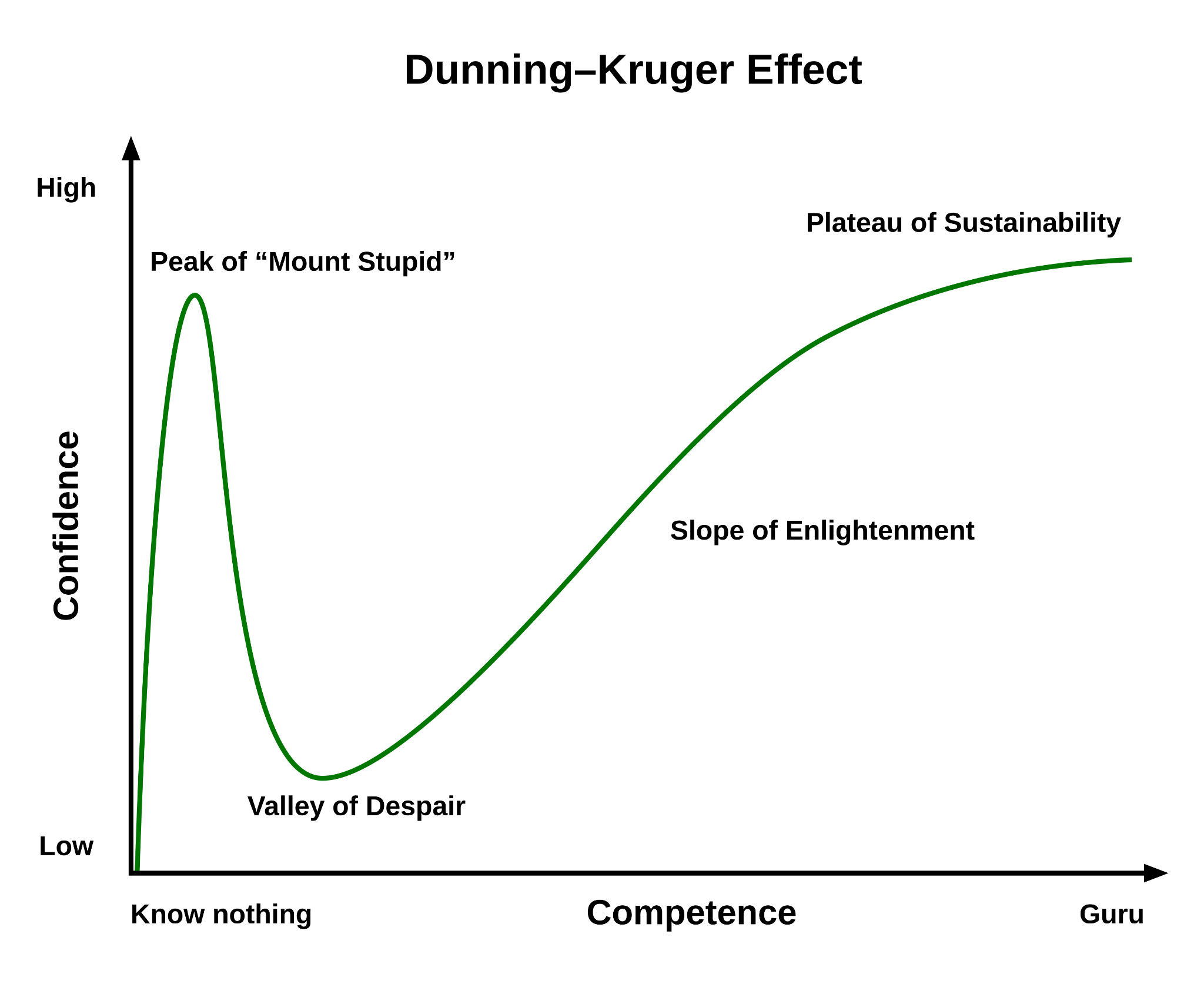
The AI Dunning-Kruger Curve
COMPLEXITY 1:
AI is not monolithic and is a series of overlapping epochs:
Epoch 1 - LLMs (GPT/Claude/Gemini) - (2022-NOW)
Epoch 2 - Agentic AI (OpenClaw/GrokBot/Muse… etc.) - (2026-Onward)
Epoch 3 - Robotic/Physical AI (Optimus/AgiBot/Unitree G1) - (2027/2028-Onward)
Things will be changing epoch-wise faster than what you understand at the bleeding edge. You can read more about this here:
https://www.donothallucinate.com/p/the-three-epochs-of-ai
COMPLEXITY 2:
For Christians, there are at least four different groups of people where wisdom and posture towards AI looks very different:
A. Parents
B. Pastors and church/ministry leaders
C. Educators, teachers, and administrators (esp. Christian K-12 and CHE)
D. Marketplace leaders
Everyone needs better education on AI. Post-education, some people might need to use more AI and some need to use a lot less.
I would encourage everyone to read some of the issues that I have brought up in the AI Christian Benchmark (2026 report):
Prompt engineering is an urgent skill users of AI must develop.
There are massive differences in ethical scores on different commandments in the Ten Commandments.
Most foundational AI platforms will not, by default, encourage you to go to church.
Silicon Valley models’ sexual ethics strongly diverge from the Christian sexual ethic.
A. Parents need to learn from the social media era and protect their kids better or Gen Z will have been wrecked by social media and Gen Alpha will be wrecked by too much AI too young
B. Pastors and church/ministry leaders need to develop greater nuance besides, “I love this” or “I hate this.” For the “I hate this” group, there are legitimate uses, especially in administrative, systems, and processes. For the “I love this” group, there are serious warnings about cognitive offloading, intellectual and spiritual dereliction in sermon prep, and legal issues surrounding data.
C. Educators, teachers, and administrators (esp. Christian K-12 and CHE) need to understand the tech better and the neurobiological implications on young people:
AI skills aren’t that hard to learn. A few hours on YouTube on prompt engineering, markdown files, MCP, and harnesses can take you from 0 to 100mph. Literally, 90% of what you’d need in the workforce could be taught in a 2-credit-hour 101 undergraduate class. AI really doesn’t need to be incorporated into every syllabi and subject.
From my seat the three biggest needs in Christian K-12 and CHE education are:
1. Spiritual and virtue formation
2. The discipline of reading and engaging with full-length books
3. The ability to create fully analog arguments that are defended both in writing and verbally
I have recently been at a few different universities interacting with students, campus ministers, faculty, and administration. Boy, has it been illuminating. Different departments are ALL OVER THE PLACE in terms of how they are thinking about AI.
The people and departments who hate it probably need more understanding, and the folks who love it probably need more discernment.
Anecdotally, there is also a paradox among students. Roughly 80% of the students I polled use AI daily. Most of them have a lot more concern than their professors. Out of several hundred students across multiple universities and departments:
0 knew what an AI harness was.
0 knew what markdown files were.
1 had heard of the term prompt engineering.
ONE.
The way in which faculty were having their students use AI made little to no sense and betrayed the likelihood that they don’t really understand the technology either. One student complained to me that their syllabi was AI-written from one professor and they confronted them about it and the professor didn’t think it was a big deal. The student pushed back and asked what the point of their degree if the students just turn in AI work and the professors grade it with AI…
What could go wrong?!?!
Conversations that I have had with faculty and administration weren’t much better and in many conversations were actually WORSE. I have heard administrators laud use of AI for free cognitive behavioral therapy. Another faculty member was excited publicly excited about an AI use case so bad that I don’t even want to type it out.
The crazy part of this is that these are serious Christians who have advanced degrees and who are responsible for forming and shaping Gen Z.
This is a big problem.
D. Marketplace leaders
It is a very tough time to be a business executive today. I’ve read numerous headlines of boomer generation CEOs that essentially have said, “I’m not sure how to navigate this new AI era so I am just going to retire.” I get it and if I were of that stage in my career that is probably what I would do.
There are three paradigms to AI that I am seeing in business:
1. Remain 100% analog
2. Treat AI like a tool that is a lego brick modular addition to the legacy business model
3. Build the entire business around this new AI era
Without going too deeply into it, most of the business leaders I’m interacting with have chosen the wrong paradigm for their particular business model. I am going to write soon about how I think the five economies that will emerge from this era (whenever I can get around to it).
The problem is that churches and ministries need money to operate. If Christian business people pick the wrong AI paradigms for their business models then it will have downstream negative impact on the church and other Christian ministries. I don’t think Christian marketplace leaders are well prepared for the AI era and a lot of the instincts are off. The losers of getting those decisions wrong just aren’t the busineseses themselves, it is the entire Christian ecosystem.
All that being said, there is another paradox here. It is perfectly reasonable to use AI for several hours a day for certain things and then not want it anywhere near other parts of your day. That is admittedly a difficult tension to sometimes hold. The ability to have nuance as we move throughout our days with different hats on that we might be AI skeptical as a parent, a power agentic AI user at your corporation, appreciate the tech on specific use cases (medicine, systems thinking…), and not want to see AI invading the intellectual supply chain of the sermon at church.
COMPLEXITY 3:
AI literacy and education levels are uncomfortably low. This plays itself out in low understanding on:
1. How this technology works
2. What it is good at
3. What it struggles with
4. What we should use it for
5. What we shouldn’t use it for
6. How to best utilize it
One of the challenges here is most folks are really busy and the inertia of everyday life just doesn’t afford to get up on the learning curve here. Also, there is a lot to keep up with sheer volume wise. Most people don’t get on learning curves until there is either a felt need or a pain point. I think for most folks that time just hasn’t come yet. This leaves a lot of people just treating AI like super-powered Google when it simply doesn’t function like that at all.
COMPLEXITY 4:
AI will forever change how humans acquire knowledge.
Since recorded history, knowledge has transferred from one human mind to another through either embodied teaching or text.
AI destroys that direct human-mind to human-mind chain and inserts itself as an epistemological middleman. This makes AI a kind of High Priest of knowledge and creates a kind of “Intellectual Strait of Hormuz.” For more on this read these two things:
https://www.christianitytoday.com/2026/10/artificial-intelligence-human-training-bias/
Pluralism remains an unhelpful default to answering questions of basic theology or ethics. Principled pluralism could be a significant upgrade.
COMPLEXITY 5:
Everyone needs proactive rules about what they will and will not use AI for. In my opinion, every new AI use case must have intellectual and spiritual justification before adoption.
One such example for me is – I never use AI for wisdom.
Knowledge, sometimes. Wisdom, never.
Wisdom is for prayer, the Bible, books, and trusted advice from people.
Almost nobody that I interact with has developed proactive rules for themselves about when they do and don’t use AI. This is a big problem and it is going to get worse.
COMPLEXITY 6:
Many Christians are on the Dunning-Kruger Curve at the peak of “Mount Stupid” where they think they have a solid grasp of AI and they know next to nothing. I really am not trying to be condescending here but an uncomfortably high percentage of conversations that I am having with Christians are at the peak of “Mount Stupid.” I don’t really want to cite examples because frankly I don’t want to embarrass anyone.
There is a helpful story here from Bruce Lee:
Before Bruce Lee studied martial arts, he said, “a punch was just a punch.”
While he studied martial arts, he said, “a punch became much more than a punch.”
After he studied martial arts, he said, “a punch became just a punch again.”
I don’t think any of us are on that third phase of AI where “a punch became just a punch again” because we have yet to go through all these new epochs of AI. At best we can sit in the complexities and tensions of it all and try to keep up.
CONCLUSION
On the one hand, I am not surprised that Christians are behind the curve on AI. It has both incredible opportunities and tremendous dangers and the news cycle is impossibly fast to keep up with.
On the other hand, I am witnessing both uncritical adoption and unhelpful rejection among many Christians.
If I were to prescribe a better way forward it would be:
A. Better education on these issues:
1. How this technology works
2. What it is good at
3. What it struggles with
4. What we should use it for
5. What we shouldn’t use it for
6. How to best utilize it
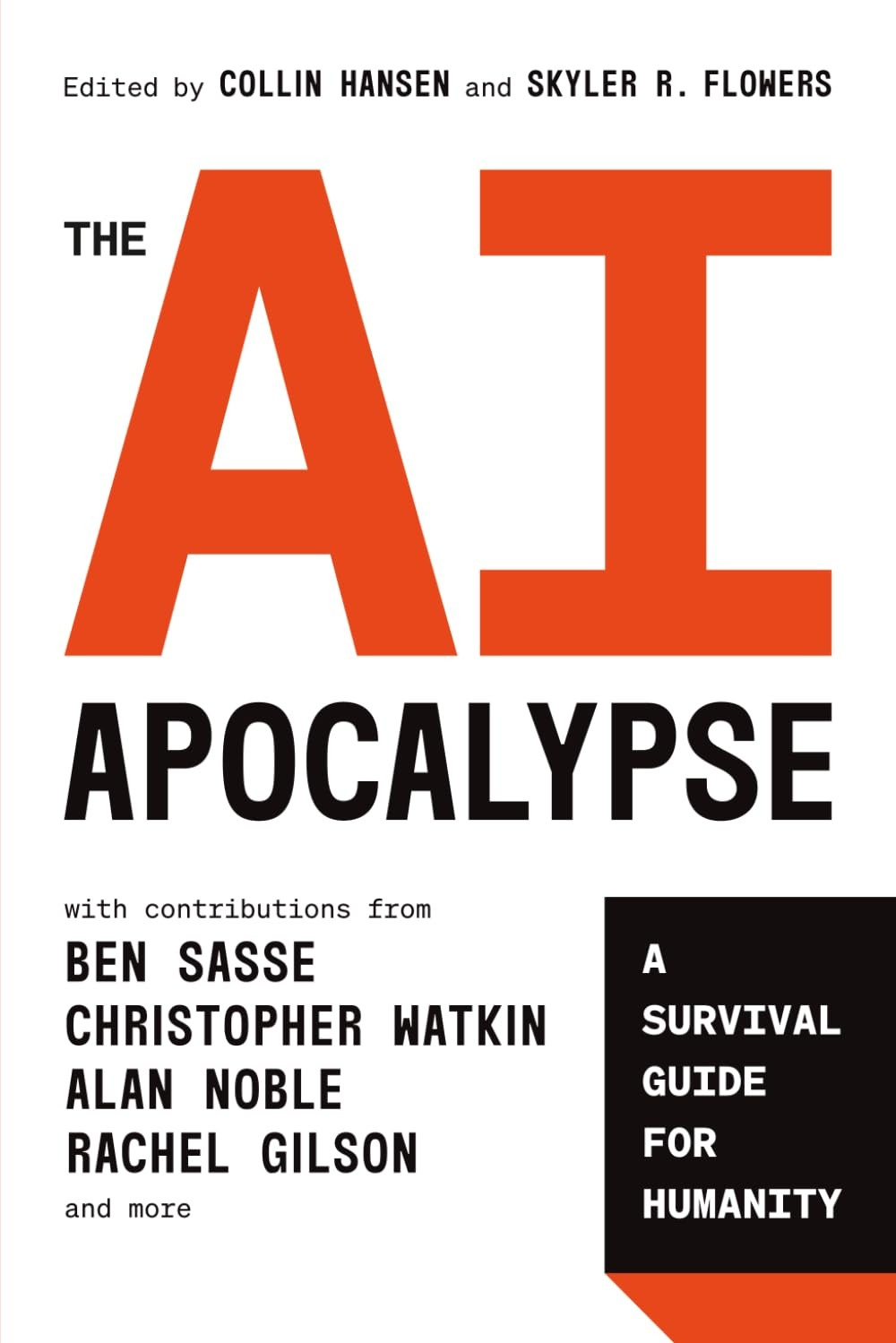
The AI Apocalypse book is worth reading:
B. Clear proactive rules for ourselves from a Christian worldview on when/where we will and won’t use AI and why.
C. The ability to hold complex thoughts about AI in tension as you navigate the fact that the technology is not monolithic and certain use cases can be an act of common grace and other use cases are truly horrible.
I have some stuff I am working on and hoping to publish soon that should also help advance this conversation some more also. I will link to that when those projects go live.
Outside of your specific guidance for pastors I don't see anything here that doesn't also apply to most people that aren't Christians or Christians who don't work in ministries or churches. I work in a large Fortune 500 doing AI transformation and most of what I do is education.
Very provocative, concerning and worth reflecting on. I have a sense that the vast majority of normal folks who aren’t exposed to this yet, are unaware of how much their working, intellectual and ‘relational’ world is about to change. Thank you brother for being at the bleeding edge of this.